
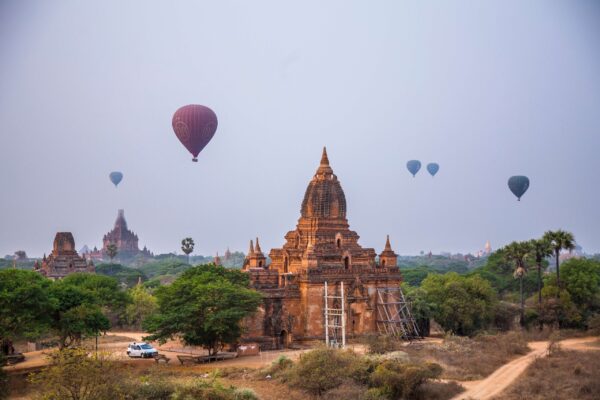
Traveling in Asia is rarely predictable. Some dream of futuristic Tokyo with its perfect cleanliness and technology, while others are drawn to unspoiled Myanmar with its ancient temples and smiling locals. Both destinations belong to the same part of the world, but the impressions they leave are as if from different eras.
For those choosing between a trip to Japan and Myanmar, it is helpful to see how they differ, how they are similar, and what impressions await the traveler in each country.
Cities of the future and the past
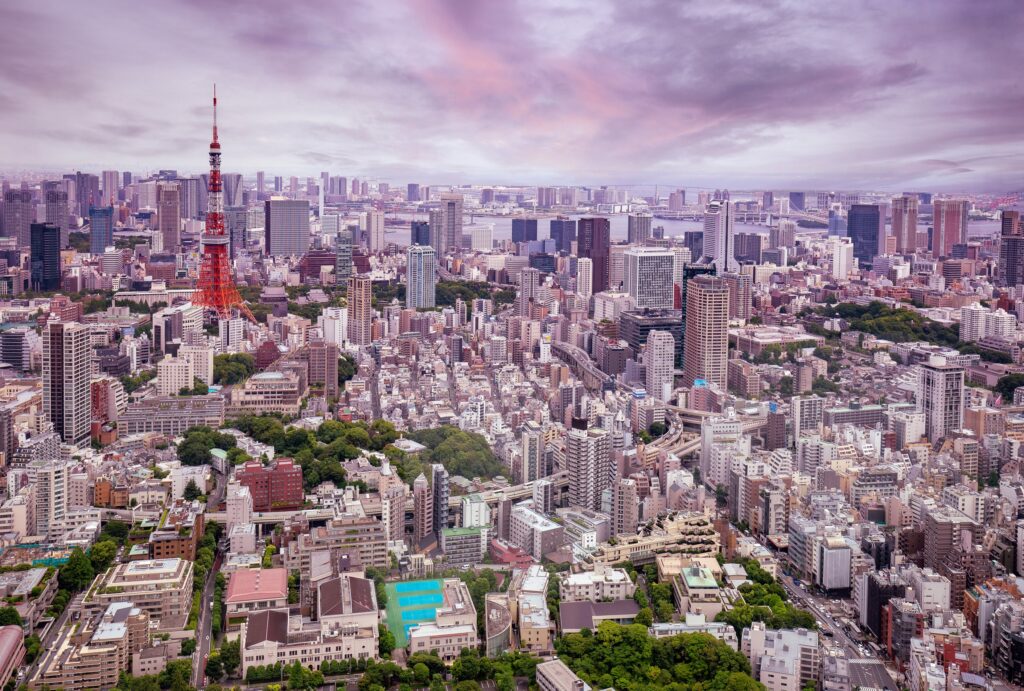
The first thing that catches the eye is the rhythm of life. Tokyo lives by a schedule, like a Japanese clock. For example, transport runs on time, the streets are impeccably clean, and people move along calibrated trajectories like robots. Here, order becomes art. Even at rush hour at Shibuya Station, the crowd does not lose its inner balance.
Myanmar, on the other hand, seems like a chaotic symphony. In Yangon, cars honk almost continuously, motorcycles weave between buses, and street vendors shout at each other in different languages. This noise is part of the local flavor. It reminds you that life here follows its natural course without haste.
If Japan is like a perfectly tuned mechanism, then Myanmar is like an old music box, where cracks only add to its charm.
Light and shadow
The lighting in these countries tells us more about them than statistics. Tokyo shines like a giant light ship. Advertisements on screens and neon signs turn the city into an endless installation.
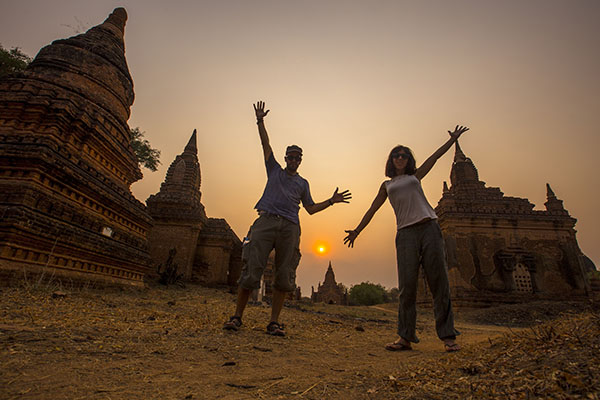
In Bagan, the light is soft and almost magical. The sunset paints the temples in golden tones, incandescent lamps give only a warm glow, and darkness falls quickly, as if nature itself is reminding us of its presence. Yangon, although more developed, remains a city with light bulbs instead of spotlights and hand-painted signs.
To travelers accustomed to the glitz of the metropolis, Myanmar will seem like a world of halftones. But it is precisely these halftones that give the eyes rest and the soul space for reflection.
What is cleaner?
Japan amazes with its sterility. There are almost no trash cans, but there’s no trash either. People take their waste home, and after the holidays, groups of volunteers come out to clean the streets. Here, cleanliness is part of a social contract, an unwritten rule that everyone follows.
In Myanmar, the situation is different. The streets are covered in dust, plastic bottles lie around temples, and children play next to piles of rubbish. However, this does not irritate. Myanmar lives without glamour, but with soul. Every crack in the wall, every stone in the dust reminds us of the time that flows differently here.
Sometimes you can understand a country by its toilets. In Japan, toilets surprise you with electronic panels, heated seats, music, and disinfection. Every trip to the bathroom turns into a technological adventure.
In Myanmar, the conditions are more modest. Often, it’s just a hole in the ground and a bucket of water. The contrast is so great that it becomes a symbol of the differences between countries.
About people
Japan impresses with its politeness. Here, no one raises their voice, interrupts, or violates boundaries. Bows replace hugs. A smile is the best way to say “thank you.”
In Myanmar, emotions are warmer. People are happy to talk to tourists, even if their vocabulary is limited to a few phrases in different languages. Merchants easily switch from English to Spanish, throw in a couple of words in Japanese, and remain genuinely friendly.
One of the most striking symbols of Myanmar is tanaka. It is a mustard-colored paste that women and children apply to their faces. It is a sunscreen, a beauty product, and part of the national identity. Tanaka looks simple, but it gives faces a softness and uniqueness. In Japan, fashion is subject to strict trends, while in Myanmar it remains a matter of intuition and tradition.
Food and prices
Travelers accustomed to Japanese cuisine rarely remain indifferent. Every dish, from sushi to ramen to yakiniku, looks like a work of art. But beauty comes at a price. Even a regular lunch in Tokyo can cost as much as dinner at a good restaurant in Europe.
In Myanmar, the food is more straightforward but surprisingly delicious. The main dishes are curry with vegetables, fried fish, noodles, and coconut milk. The aromas of these dishes mix at every turn. And all this costs a penny. A family of four can eat for the price of one dish in Japan. But it is worth remembering that sanitary conditions sometimes leave much to be desired, and the stomach is not always ready for such exoticism.
Climate and nature
The difference between the countries can be felt literally on your skin.
In Japan, the air is cool, especially in autumn and spring. Nature is meticulously maintained. Parks are well-trimmed, mountain trails are neat, and cherry blossoms fall as if according to a script.
Myanmar is a hot and humid country. Walking through the streets is like going to a steam bath. But the landscapes are breathtaking. Thousands of temples greet tourists in Bagan, Inle Lake, with its stilt houses, green rice fields, and sunsets that are hard to take your eyes off.
Temples and faith
Temples are the heart of both countries, but their spirit is different. In Japan, shrines are active, and you can feel the breath of modern faith there. People come to bow, throw a coin, and pray for health or good luck. Everything is orderly and neat, as if faith itself is subject to a schedule.
In Myanmar, the temples are ancient, sometimes half-ruined. They seem to breathe history. Some are silent, with only the wind rustling the fabrics at the entrance. Here you can see children playing at the stupas, monks feeding pigeons, and old people sitting in the shade, gazing into the distance. These scenes create a sense of living holiness.
Safety and everyday life
Japan has long been considered one of the safest countries in the world. The level of trust between people is high. In Myanmar, by contrast, fences and barbed wire are standard. This may be an attempt to protect themselves from poverty, which is still part of reality. Nevertheless, in Myanmar, you feel caution, but there is no fear. People are friendly and willing to help, but life there is more complex. Travelers should take this into account and respect local customs.
Two sides of the Asian experience
Traveling from Japan to Myanmar is like jumping from the future into the past. In one case, the tourist is immersed in perfect order, where every detail has been thought out. In the other, they are immersed in a chaotic yet sincere beauty, where everything breathes with history.
Japan teaches us to admire perfection, while Myanmar helps us see the beauty in imperfection. For those seeking a balance between comfort and adventure, the ideal route would be a combination of the two. Start your journey on the neon-lit streets of Tokyo and end it at the golden temples of Bagan.
Travelers who have visited both countries begin to understand that Asia is not a single continent, but a whole gallery of worlds, where every frame is worth seeing.
Comments are closed